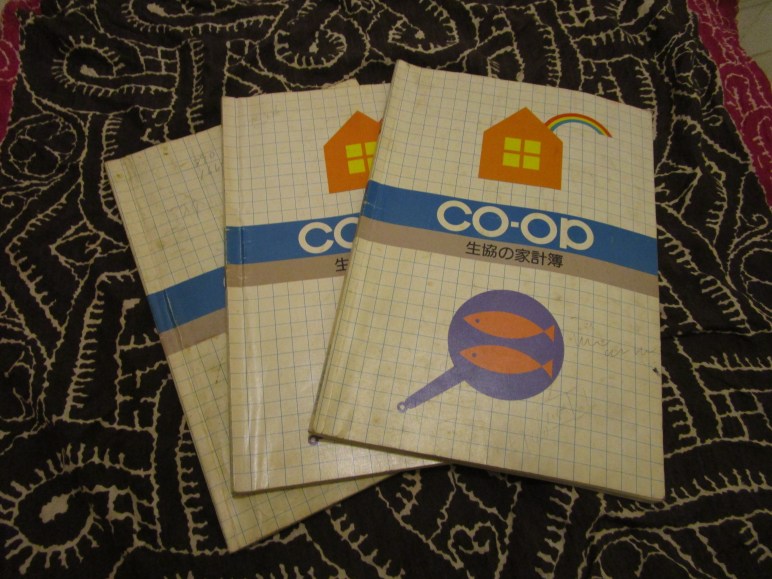
While cleaning out some old stuff, I came across three household accounting books used by my mother in the early ‘80s while I was attending Kyoto University. I never lived at home after I left for college in 1979, and she passed away in December of 1994. When I was about to put the books into a recycling box, something made me open one of them. Inside I found my mother’s remarks about her life. Compared to my father who left volumes of his journals, her writings are rare. So I started reading.
An entry drew my attention: ”Enjoyed Two Gingko Trees by Chogoro Kaionji. It’s been a while since I encountered Kagoshima dialect. Made me feel nostalgic.”
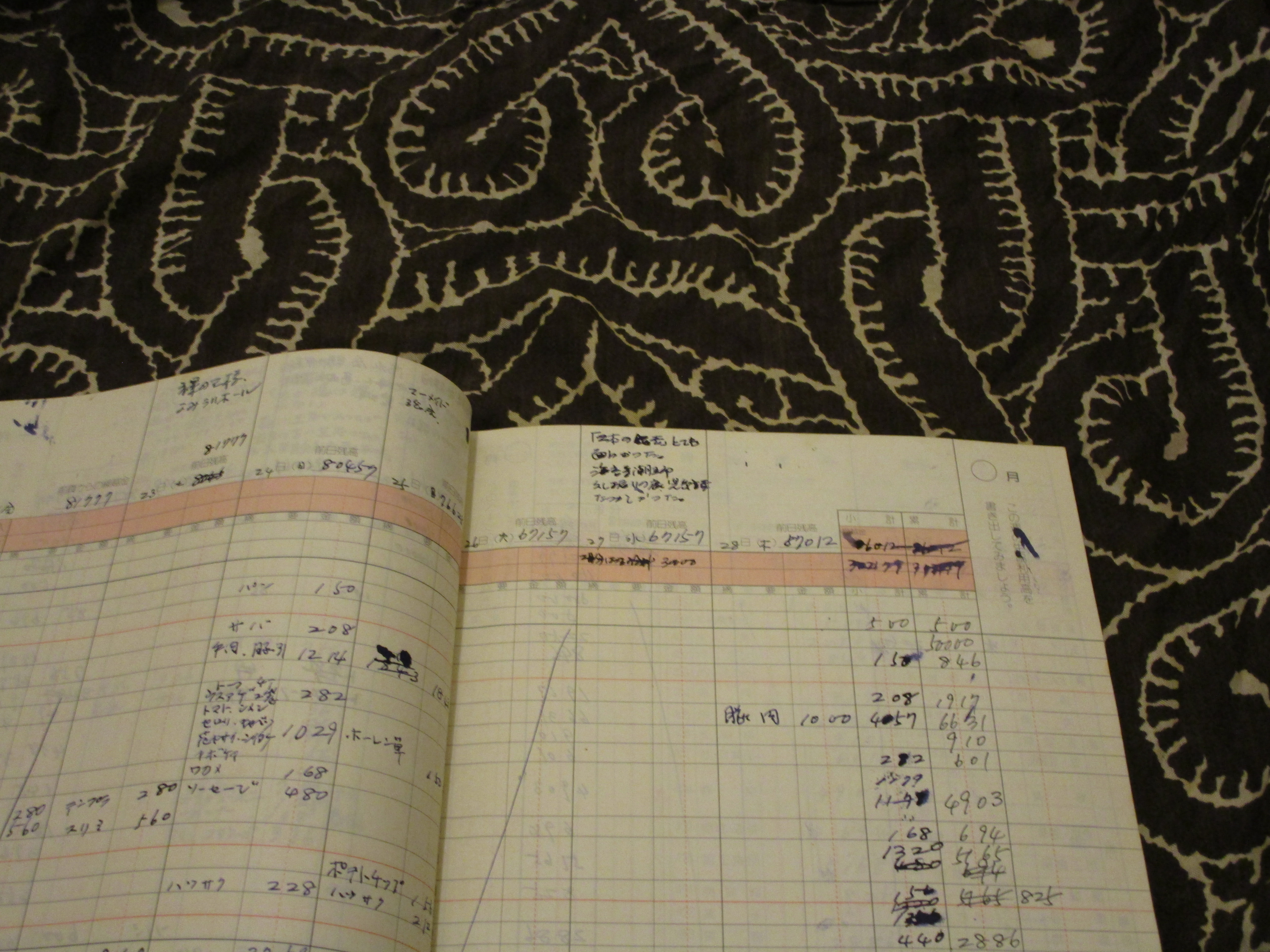
My mother grew up in the city of Sendai in Kagoshima, a southern-most prefecture in Japan beside Okinawa. People in that part of Japan speak a very distinctive dialect, and Two Gingko Trees is a historic novel set in the countryside of Sendai. When I read the book a few years ago, I wondered if my mother had read it and what she might have thought of it.
My parents were voracious readers, and I inherited the trait. Our interests, however, were not exactly the same. In fact, I rebelled against her, and one of many manifestations of my rebellion was to deliberately avoid books she wanted me to read. After I left home I read many of my mother’s books and found them meaningful. Alas, I never had a chance to share our love of books with her.
It was also very interesting to read her nostalgia about Kagoshima. My mother never talked much about her life. She was born in 1923. Her mother died young, and as the oldest daughter she had to take care of her younger siblings instead of going to school. In the early ‘40s she left for China and worked as a telephone operator. After the World War II she eventually made it back home but then left for good soon after. For over 40 years—until years after the note was written—she did not set foot in that part of the country.
She did not talk much about her life in China, either. On a VJ Day, she wrote: “The day of defeat. It’s getting as hot as that day. Images of Chinese flags fluttering in the blue, blue sky and nicely dressed Koreans marching are still vivid in my mind’s eye. While saying ‘never again [to engage in a war]’ Japan has come this far… Can I believe it or not…’”
After the World War II, my mother became an activist, and anti-war and anti-nuclear bomb were among her political passions. My father told me that she had attended many demonstrations against the renewal of the U.S.-Japan Security Treaty in 1960 while being pregnant with me. I remember being taken to anti-nuclear bomb meetings and Maruki Gallery for the Hiroshima Panels as a child many times. Her notes revealed that she was still continuing her tradition to attend the Hiroshima Day vigil at the Gallery.
My mother did not tell me much about her life. But perhaps it was me who was not interested.
I am interested in her life now when she is no longer with us. I am grateful for her notes so I get to know a little bit more about the person who was so close to me physically yet seemed so far away.
I am keeping these accounting books for now.
 Accompanist for the Soul